Son, sun, and Summer
ease their way toward
absence —
I am well attuned
to the cycle.
And experience
has shown
it appears
far easier to leave
than it feels
to be
left.
— C.Birde, 8/16

Son, sun, and Summer
ease their way toward
absence —
I am well attuned
to the cycle.
And experience
has shown
it appears
far easier to leave
than it feels
to be
left.
— C.Birde, 8/16

Last evening’s sunset,
caught in sky and water.
Breathe,
and release.
— C.Birde, 8/16
I wear the heat like fatigue —
a pearled and sequined sheath
that restricts breath and movement,
quells thought,
and drains
creative impulse
steadily
away.
— C.Birde, 8/16
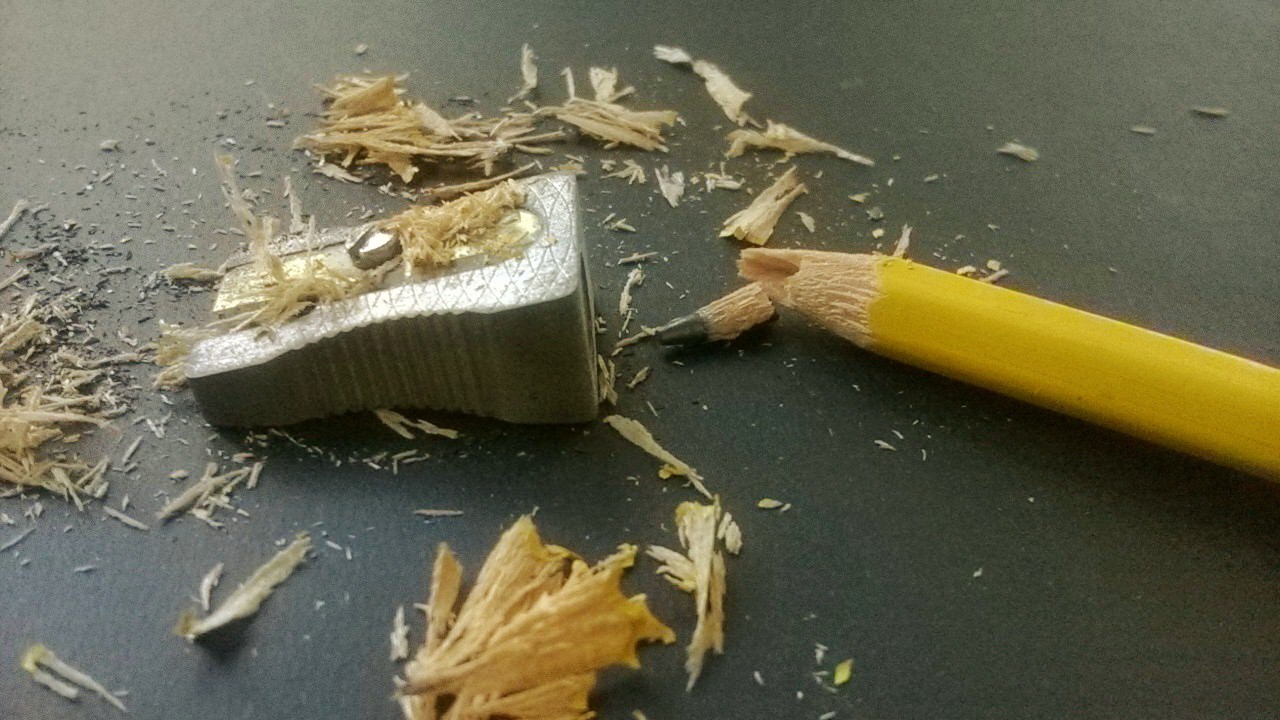
One hand holds a pencil — a slender, hexagonal length, sheathed in bright yellow paint; the other grips a sharpener — small, silver rectangle, the blade within angled inward over its hollow belly. Insert pencil into sharpener. Apply gentle pressure. Crank the wrist and twist repeatedly. Curls of yellow-edged wood peel away from the blade. Dust of graphite falls. Withdraw pencil. Touch sharpened tip. Though it pricks the index finger — indeed, leaves a gray dot smudged upon the whorled fingerprint — the point itself wiggles, falls away. Broken. Reinsert pencil. Twist and turn. Watch carefully as the graphite core is slowly exposed from beneath splintered cowl of wood. Observe as the tip breaks while sharpening. Withdraw pencil. Tap out sharpener to remove wood, and dust, and graphite tip lodged within the channel beneath that bright, slender blade. Reinsert pencil. Twist and turn. Extract pencil from sharpener. Touch tip. Sigh as point falls away. Repeat. Over. And over. And over…
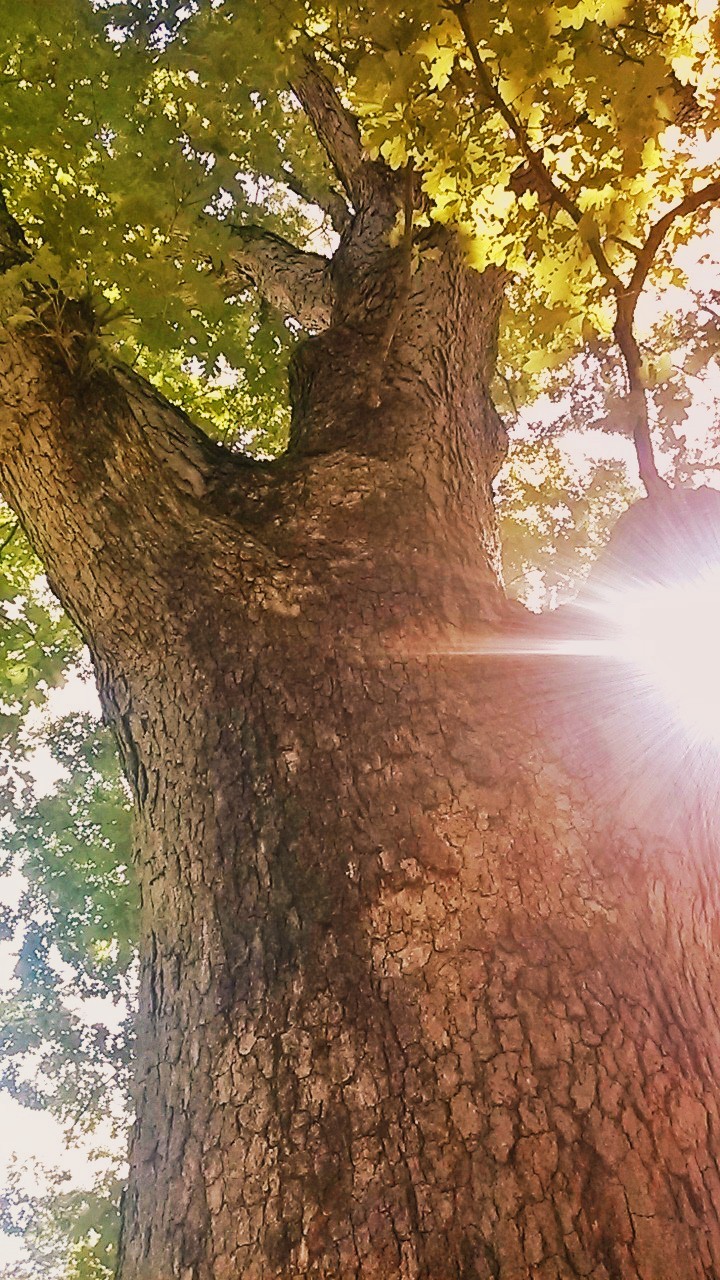
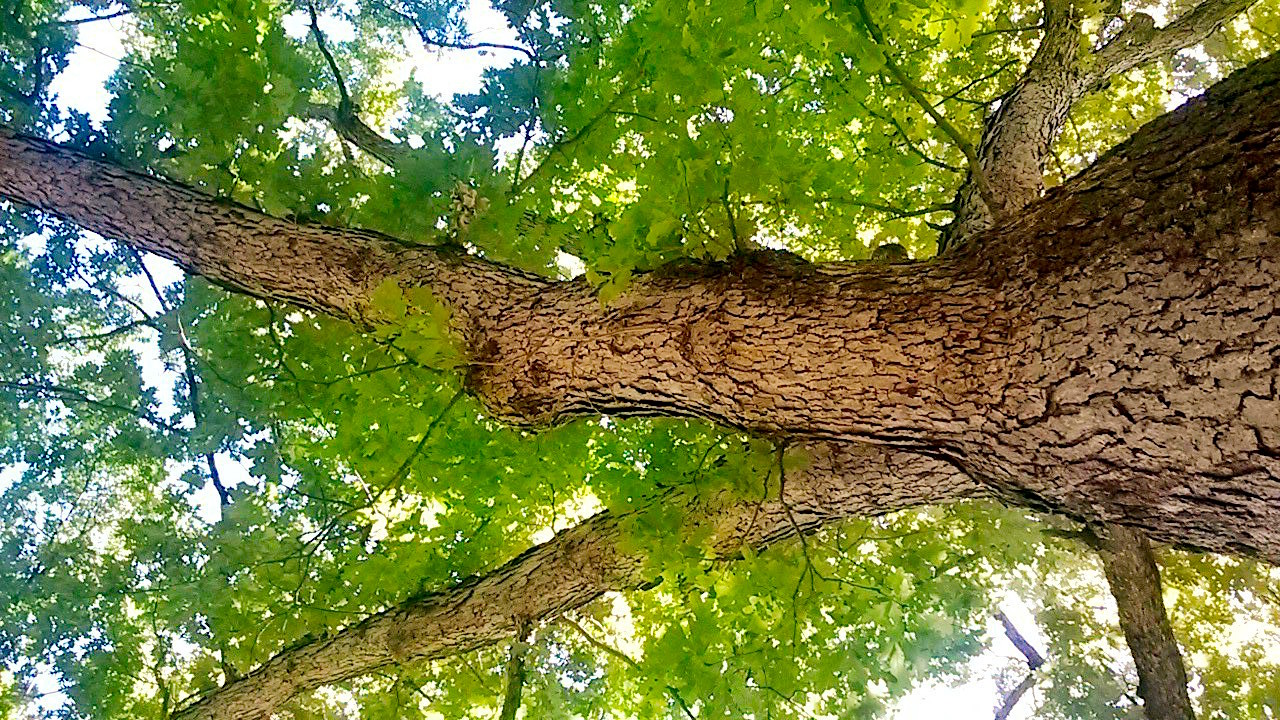
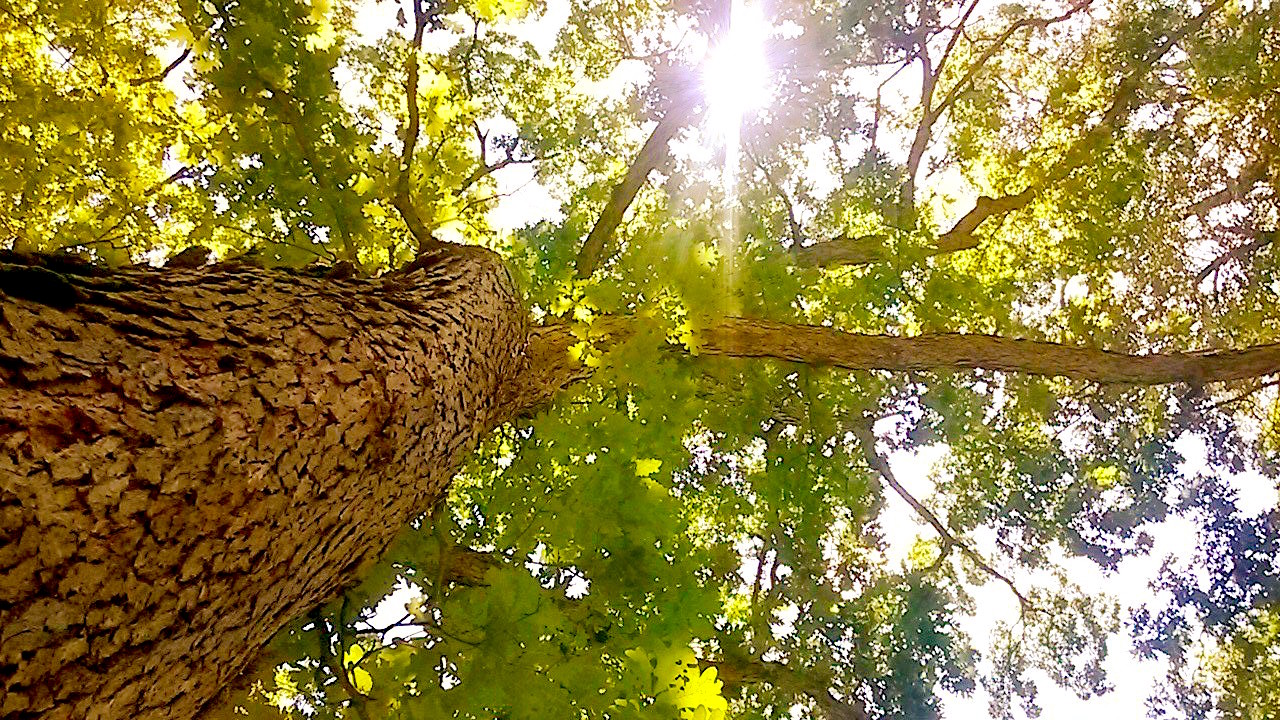
Allow me to introduce the Addis White Oak. This giantess, Quercus Alba, rears up from Greenwood Cemetery higher than I can guess. She would easily offer generous shade to a four-story home; it’s common for white oaks to reach heights between 80 and 100 feet.
•
Her extended limbs stretch outward at great, wide angles in all directions, easily as far as she is tall, and her lower branches run almost parallel to the earth. She wears gently round-tipped leaves, most of which are about eight inches in length, longer than my hand.
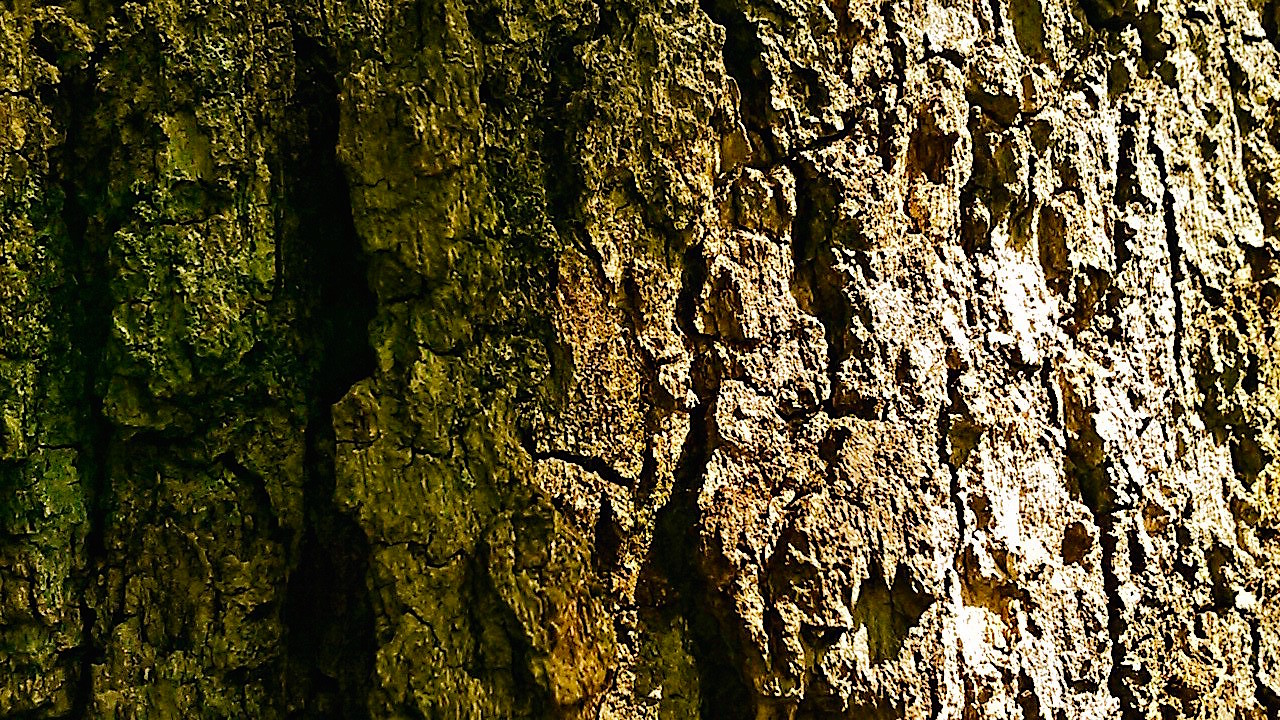
Her bark is far from white, but rather varying shades of gray. It is so scaled and deeply grooved, I can slip my fingers into fissured clefts. In some areas, her bark rises several inches from her in trunk in long sheaths.
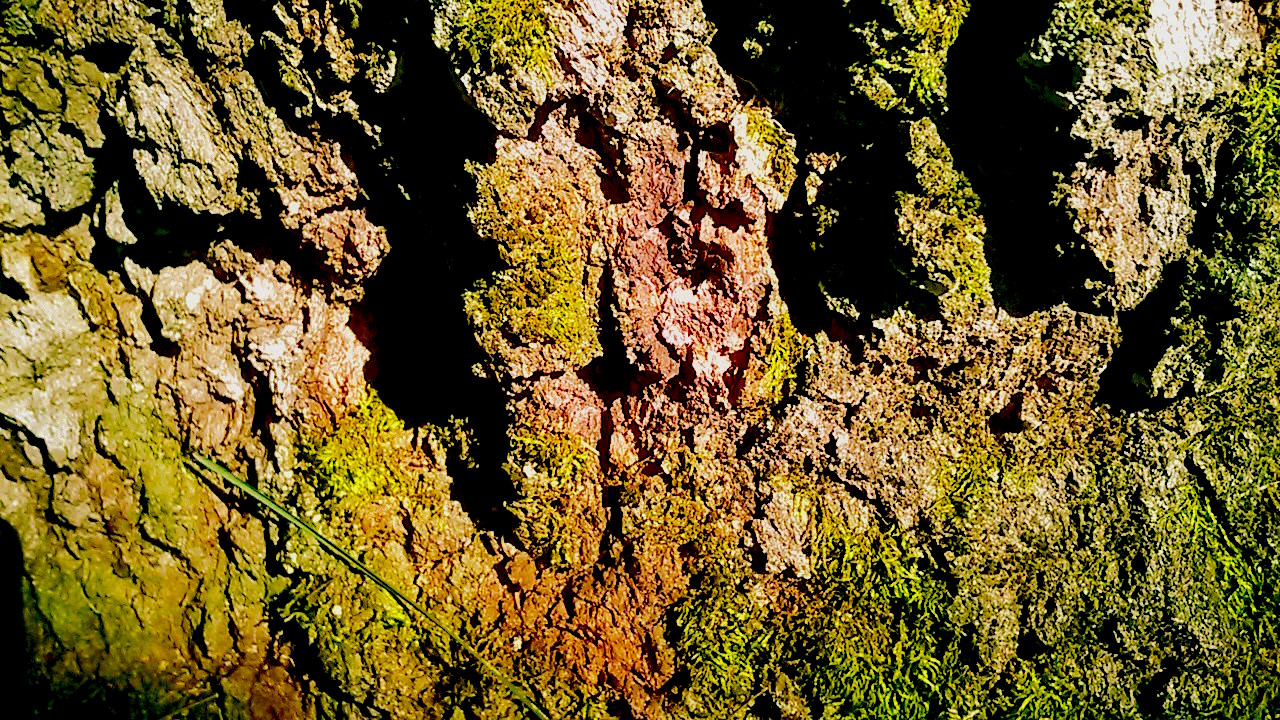
Her roots are well anchored in the earth; her toes and ankles are felted with moss and lichen. She is just one of several enormous trees in this quiet little cemetery, and she is not the largest. I call her the Addis Oak for the family buried at her feet. Standing beneath her, I hear the creak and rustle of Time passing.
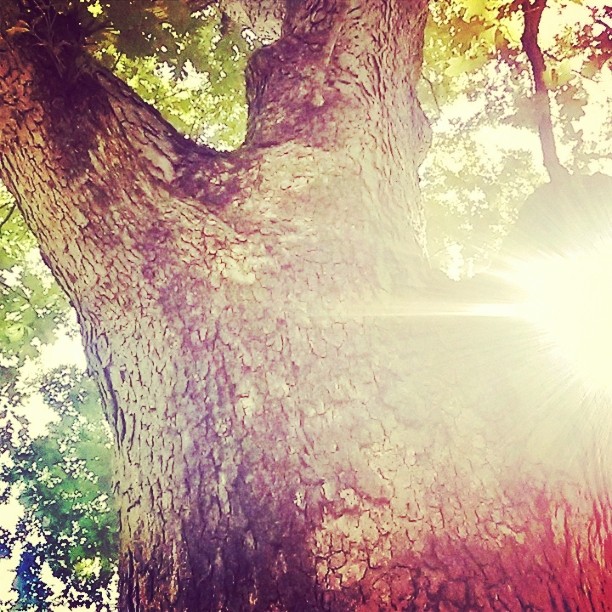
In an effort to estimate this tree’s age, I followed a simple formula — measure the trunk’s width at about four-and-a-half feet from the ground (137 inches); divide this number by pi (137 inches ÷ 3.141 = 43.61); multiply this number by the tree’s growth rate (white oak growth rate is 5, therefore 43.61 x 5 = 218.08), which makes this tree, by rough estimate, over two hundred years old. White oaks can reach ages between 200 and 300 years. Truly impressive. This is by no means the oldest white oak — the Wye Oak in Maryland was estimated to be over 450 years old before it fell in a thunderstorm in 2002. Another venerable white oak, the Great White Oak in Basking Ridge, New Jersey — ailing, though still standing — is thought to be over 600 years.
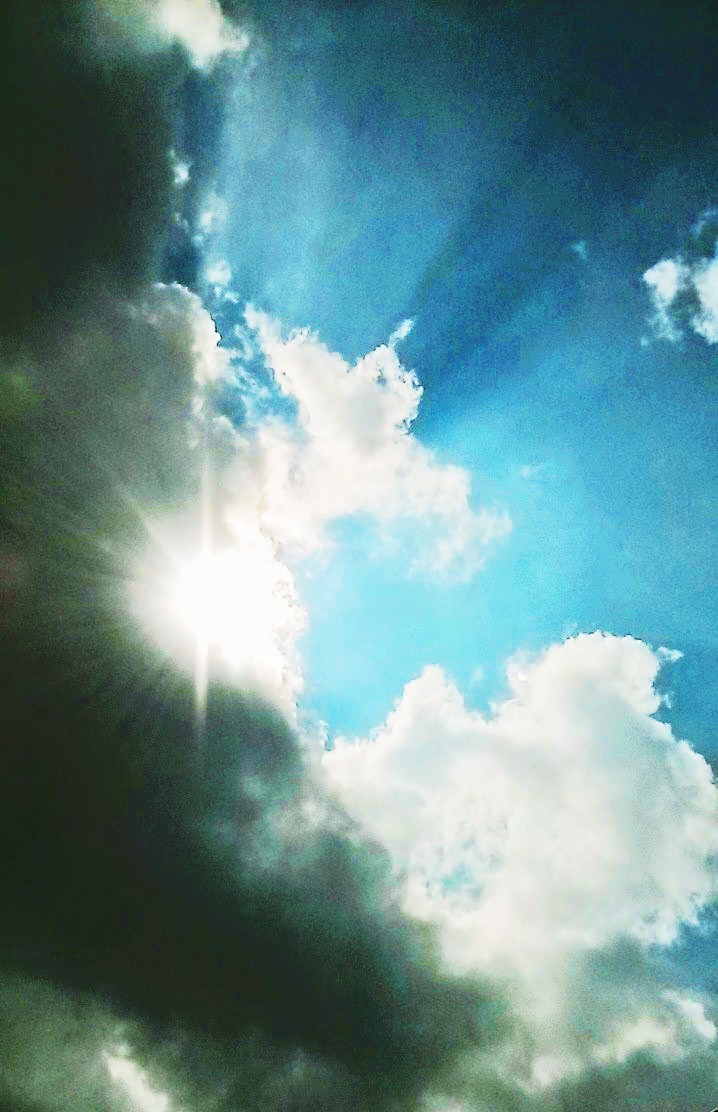
Gather all the light of yesterday —
sun and moon, star and fire,
in shafts and beams and sparks.
Strain thrice —
of cloud and shadow,
and random occlusion
(reserve for another use).
Pour into large, wide-mouthed jar
with tight-fitting lid
and set to distill
in a south-facing window
for three weeks.
Taste, to assure desired strength.
Decant into phials and bottles.
Inhale to counteract the blues.
Dab on pulse points to restore the heart.
Apply to the soles of feet to lighten the step.
Stroke over eyelids to find silver linings.
Touch to the tongue’s tip to sweeten words.
Glide over lips to revive a smile.
Pour over ice in Summer and serve
with mint and lemon slices.
In Winter, heat with cinnamon
and cloves and allspice
and ladle into mugs.
Share with friends, family,
and strangers.
Use generously.
— C.Birde, 8/16
I walked with two friends. One brought her husband, the other arrived late. We met to climb the mountain, the path ever changing before us. Initially, our feet crunched over coarse gravel; we wore dappled green and honeyed light as cloaks and crowns. Next, we walked through a parking garage, sparse of cars and curled with shadow. Finally, we stepped, single file, over a plush red carpet along a narrow aisle that moved in straight lengths, rose in flights of short steps, and turned at right angles through a museum. We passed glass display cases of antique devices — clocks and telephones and radios — until we reached a pair of sunken benches upholstered in red. Sinking into the benches, we sat together before an antique miniature pipe organ set against one wall. A marvel of construction, crafted entirely of polished, glossy wood and bright brass, the organ was a thing of beauty…until it began to play. Its keys and pedals moved entirely on its own mechanized synchronizations, and the music that blared forth was discordant, cacophonous. Despite this, despite the path’s many mutations, one scene melting into another, the only aspect of the journey that grieved me was the realization that my two friends — who each were so dear to me — had nothing in common, shared no bond beyond me, myself. Unable to build any connection between them, they could only exchange wan smiles with one another before looking away.
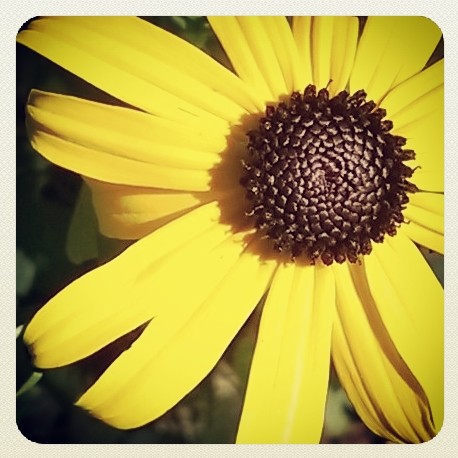
I pause at the garden gate
to exchange brown-eyed glances
with Black-Eyed Susans.
— C.Birde, 8/16
Color of marbles and Luna moths and sea glass,
of raw youth’s inexperience
and cold hard cash.
Color of movements and parties;
the chlorophylled light
of leaf-fringed canopies.
Color of magic and malachite,
myth and tea,
of life and growth and jealousy.
The signature hue of a singular Fairy.
Color of dryads and druids and
emerald isles;
the color caught in Lena’s eyes.
Color of farmers’ markets,
Summer’s ache,
and tomatoes’ leathery leaves,
the too-sharp scent of just-pulled weeds.
Color of woodlands and meadows and mantises.
Moss- and fern-touched,
the shades of green.
— C.Birde, 7/16
Built within a natural cavern, this enormous, sub-terranean facility spreads as far as the eye can see, recedes into shadow. A vast metal structure is anchored to the ceiling far above from which depend industrial light fixtures strung at intervals from thick cables. Highly polished floors gleam bright white. The horizontal aspect is interrupted only by a handful of lectern-style stations scattered about the otherwise empty space. Uniformed workers in hard hats move between the stations to monitor them, adjusting dials and switches, pressing flashing buttons. Though my companion and I look utterly out of place in our jeans and t-shirts, the workers do not deviate from their tasks as we pass. Our footsteps throb and echo.
We soon reach the object of our search — a large free-standing structure that resembles a sleek, stainless-steel armoire. On closer inspection, I realize it is a free-standing elevator. My companion presses a raised button on a burnished panel, and the elevator’s thick glass doors slide open noiselessly. Once we have entered, my companion again presses another button. The doors seal shut, and the elevator begins its descent. We head far, far below, to the facility’s power source — the heart of a nuclear reactor.
The elevator gathers speed with each second of its descent. Soon, my ears are filled with a faint “whooshing” sound. A dull red light begins to fill the downward shaft. I glance at my companion. He is silent, hands in his pockets, his gaze fixed above the glass doors to read the flash of numbers indicating our plunge. His apparent calm does nothing to alleviate my growing panic, which soon escalates to hysteria. Heart pounding, breath restricted, I spring at the burnished panel, indiscriminately punch buttons. When the elevator shudders and groans, interior lights flickering, I find the faintly luminous “up” arrow and lean the heel of my hand against it.
The elevator responds — agonizingly slowly. Reversing course. Beginning its initial ascent. Gathering speed. My panic is similarly slow to depart.
